

At Juvé & Camps, viticulture is not a recent activity, but a legacy that dates back to 1796 and has found its most defined expression in the production of sparkling wines since 1921. In Sant Sadurní d’Anoia, the heart of this tradition, we have built a strong identity based on demand for excellence, consistency, and an honest reading of the landscape.
Our way of understanding wine places origin at the center. Not as an abstract concept, but as a daily practice: vineyard, territory, and time as the pillars of a single philosophy.
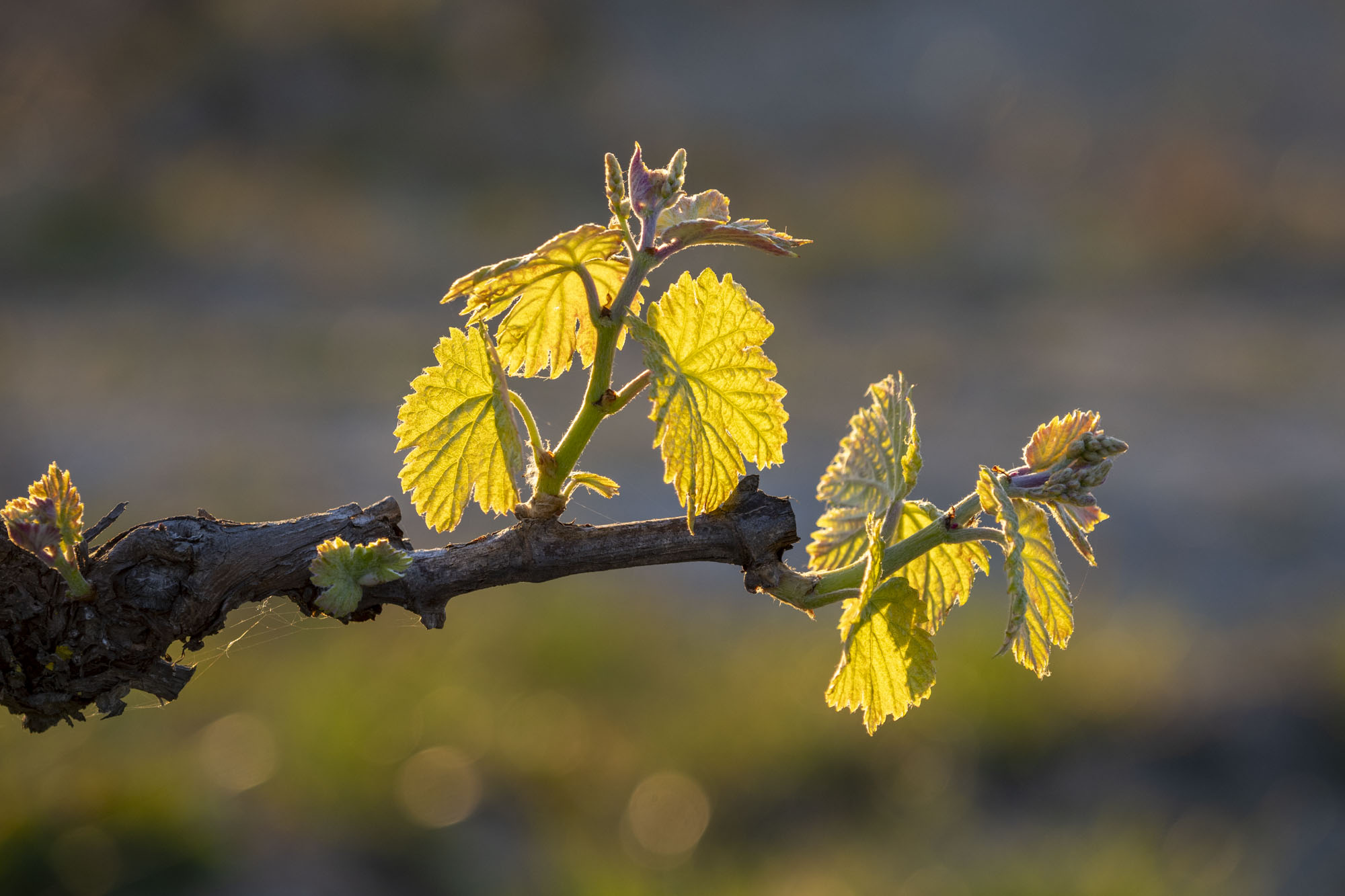
Organic vineyards and respect for natural balance
The foundation of the project rests on a tangible reality: 252 hectares of estate-owned vineyards farmed under organic certification. This commitment is not only an agronomic decision, but a way to preserve living soils, encourage biodiversity, and maintain the balance of the Penedès winegrowing environment.
Organic viticulture, in this case, is understood as a system consistent with the idea of identity: the healthier the vineyard, the more precise the expression of origin in the glass.
Hand harvest and selection at origin
Manual harvesting is part of this same rigor. Each plot is worked with individual attention, respecting ripening times and ensuring a careful selection of the grapes. This approach allows us to preserve the integrity of the fruit and ensure that each wine is born with maximum fidelity to the vineyard.
It is precision viticulture, where human intervention does not accelerate processes, but accompanies the natural expression of each plot.
Winemaking on the estate: full process control
Another key pillar is full winemaking at the winery. From grape reception to bottling, the entire process takes place on the estate, allowing absolute quality control and a technical continuity that results in stylistic coherence.
Long aging: time as an oenological tool
At Juvé & Camps, time is not a resource, but a raw material. Long lees aging is one of the defining elements of our philosophy. This extended rest adds aromatic complexity, texture, and depth, while refining the bubble and preserving the personality of each vintage.
Historic varieties and reading of the landscape
The commitment to traditional Penedès varieties strengthens the connection to the territory. Macabeo, Xarel·lo, and Parellada are not just grapes, but the foundation of a viticultural identity that has been built over generations.
Their cultivation, integrated into an organic and sustainable model, allows for a faithful interpretation of the landscape and keeps alive a heritage that is part of the region’s winegrowing legacy.
Sustainability and origin as a future axis
We are clear about one idea: only through deep respect for the land is it possible to craft high-expression sparkling wines. Sustainability, understood in the broadest sense, is not an added attribute but the foundation upon which the entire process is built. Origin, precision, and time thus define an identity that looks to the future without losing its memory.


